
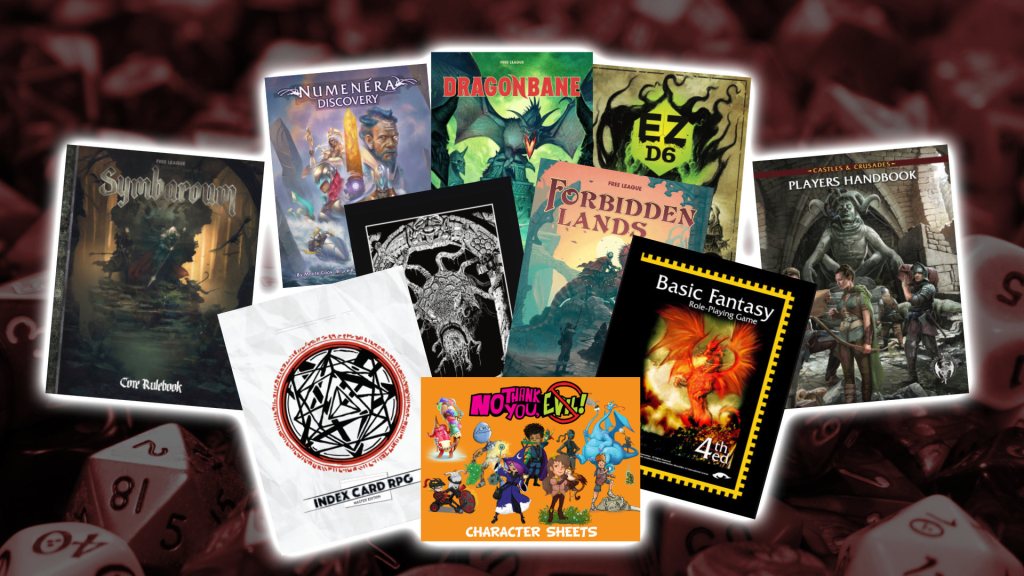

In the few short years I’ve been a GM I’ve now managed to run eleven different systems. It’s not a lot, but it is a nice number to offer a countdown to my favorite! Note, with the exception of the 11th spot, I have enjoyed running all these games. This is a reflection of my thinking at this moment.
11 – D&D 5e
This remains the only system I will not run again. I recognized people love 5e. It’s popular for a reason, and it’s not all to do with brand recognition or marketing. It’s just not for me. By the time my campaign was winding down I was having zero fun running it, and when I play games which lean into the same “optimize your build” ethos I end up being bored. I’m glad I ran it, but I don’t need to go back.
10 — No Thank You, Evil

No Thank You, Evil is a simplified version of Cypher System which uses a d6 for game play. It’s designed for children as young as 4 or 5, and the game play can be advanced to be appealing for all ages. It’s the first game I ever had success running with my youngest, when he was 5, and he picked it up and ran with it right away.
I ran a table of No Thank You, Evil at Ecclesicon back in April and the kids who played had a good time. The game is, however, almost too simple. My youngest was ready for more complex games after a few sessions of playing it. That simplicity can also be a plus, however, we’ll play it when he’s taking a bath with no dice or paper sheets. We just tell Siri to roll a d6!
If you want a good starter RPG to play with younger children, No Thank You, Evil is a good place to start. The box has everything needed to play, as well, which is a plus.
9 – Symbaroum
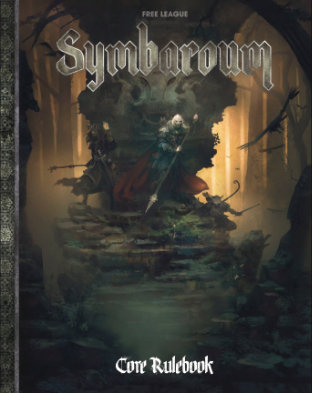
There is so much about Symbaroum that I love. I love the setting and the social dynamics it opens up. I love the corruption mechanic tied to casting and artifact use. I love how wearing armor makes a character easier to hit, but more difficult to hurt.
There are also elements I’m still pondering. Symbaroum is a roll under system, which I love. It is more crunchy than other roll under systems I’ve used, however, because a target’s stats modify the d20 target number. It takes a bit of getting used to, but by the end of our session everyone at the table grasped how the system worked and were doing some fun things with it. Even with the added math numbers remain low, which makes things faster at the table.
I’m keeping it in the nine spot because I’m still new to the Symbaroum and want to play it some more. But this is a game worth checking out!
The book, however, needs to be revised. It’s organized in an odd way.
8 – Castles & Crusades

Castles & Crusades was the third system in which I ran an extended campaign 1, and I find it’s a lot faster at the table than a most other d20 based games. I enjoy the takes on different fantasy tropes and how easy it is to adjudicate checks when players come up with ideas. The only reason it’s listed in eighth place is because, at its heart, it’s still D&D. Right now I’m having a bit more fun playing other systems.
I’d play C&C again in a heartbeat though, and may design a one shot for it at some point.
Definitely worth taking a look at, and they just launched their Kickstarter for their new printing.
7 – Index Card RPG
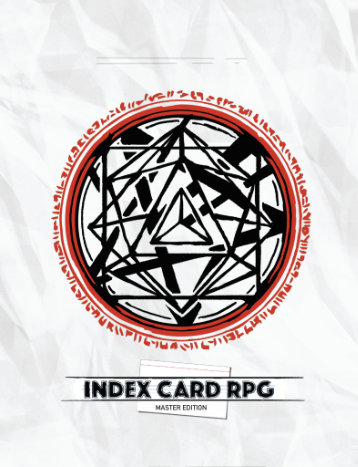
I wasn’t sure what to make of ICRPG when I first picked it up, but I soon grew to love it. It’s mechanics are dead simple, and the different worlds baked into the Master Edition core rules are a blast. I’ve read a few sci-fi TTRPGs, but when I wanted to run a sci-fi scenario ICRPG was my go to.
It could use a bit of clarification on how advancement works, since there are two different mechanics which can be used in conjunction with one another, but both the speed of game play and the freedom players have to run their characters is terrific. I’m a fan. Someday I’ll revisit this system as a GM!
6 – Basic Fantasy Role-Playing Game
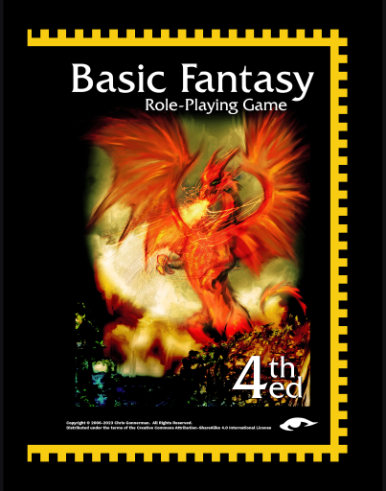
BFRPG is the second game I ran after returning to the hobby, and my campaign has been going for three years. I’m so glad I found it.
It pained me to move it out of the top five, but that’s not a reflection on the system! Basic Fantasy RPG is a fantastic game with simple mechanics that capture D&D as I first encountered it. It’s open source, has an incredible community behind it, and printed books can be purchased at near cost. There is no reason to not check it out.
As with Castles & Crusades, however, it is D&D at its core. That’s the only reason why it got bumped from the top 5. I’m exploring other styles of game right now.
If you are looking for a game that captures older school play, though, start with BFRPG.
5 – Forbidden Lands
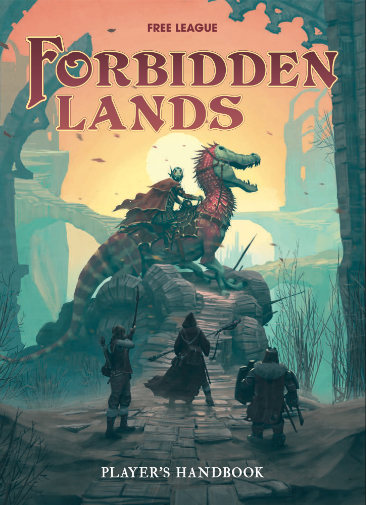
To be honest, I’m shocked to see Forbidden Lands this high on my list. The dice pool mechanics are simple, since only 6s and 1s count (and the 1s only count in certain situation), but as I reviewed the game I felt like it might be too many dice to roll. The game is also brutal and gritty on a level I tend to find stressful rather than fun. Also, calling the lore “bleak” is an understatement.
And then I ran the game, and fell in love. The danger is real, so players have to think before they act. The action economy in combat is fantastic. Initiative is fast. And combat rolls feel consequential. It was a blast to have at the table, and I want to run another group on the short adventure I created for this game in the near future.
4 – Shadowdark
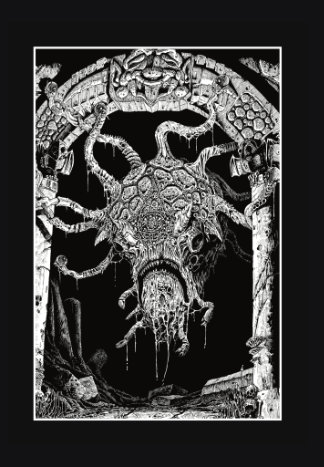
Take old school D&D, add in some elements of 5th Edition D&D, and then give it a shot of Dungeon Crawl Classics. Throw these ingredients into a blender and you get Shadowdark. The writing is succinct, the artwork is gorgeous, and the combined elements of gameplay create something that feels unique. It is D&D at its core, but is so fresh I don’t feel like I’ve “been there, done that” when I play it.
Everything about Shadowdark sets the tone for the game, but the real time torch timers may be the best part of the game from a GM perspective. Players can sit around talking about who is going to try to open the door for fifteen minutes, but that’s also fifteen minutes lost of life-giving light!
I need to run a Shadowdark funnel at some point soon, because it’s fun. I’ve never enjoyed having two characters die in the same room before!
3 – EZD6
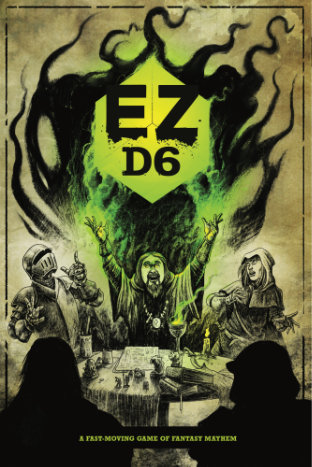
EZD6 is, by far, my favorite TTRPG system to run for a one shot. The mechanics use no math, character builds are simple but distinct, and everything in the game happens fast. So fast, in fact, that I can make room for characters to have role playing situations in a one shot! That’s a huge plus.
I’ve got a trilogy of one shots for EZD6 and I’ve had a blast running them. The first chapter is, in fact, the only adventure I’ve run multiple times. I’ve yet to explore the additional books EZD6 has, but I will do in the not-too-distant future. Once EZD6 cracks a way to do long-term character advancement it will become even better.
If you’ve not picked this up, it’s well worth doing so.
2 – Numenera
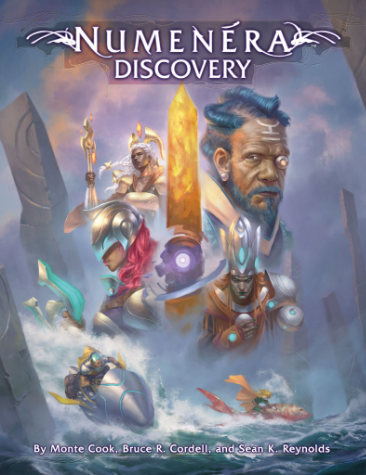
Numenera is the game which convinced me I don’t need to roll dice in order to have fun. The Cypher System, which was created for Numenera, is dead simple. Everything has a level, from 0 to 10. To find the target number on a d20 the level is multiplied by 3. A character’s skills, assets, abilities, and effort can be used to lower the target’s level. This, in turn, lowers the target number. That’s it, every other mechanic is built off of that simple design.
GMs have fun by describing what the NPCs do, how the world is reacting to the character’s actions, and by tossing in an intrusion here or there to toss a wrench into the works. And, if a new NPC or monster is needed, a GM creates one by setting a level and determining what it does well. That’s it, new creature created.
The cherry on top is Numenera’s setting, which is weird. It’s science-fantasy at its best.
The combination of fast mechanics, simple prep, and a cool setting makes for a fun time. I love it. And I’m looking forward to playing more Cypher System games soon!
1 – Dragonbane
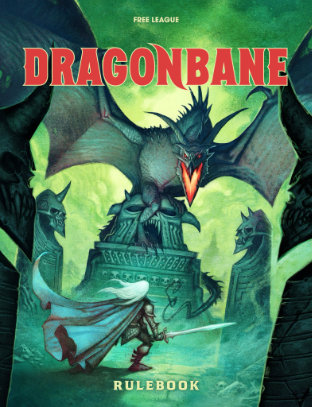
I was smitten with Dragonbane from the moment I first opened the box set. The art is fantastic, the layout and design are beautiful, and the system’s organization is about the best I’ve ever seen.
Then we get to the system itself.
I am a sucker for roll-under mechanics. To me, they are intuitive because they make the attribute scores matter. Not only is a Dragonbane a roll under system, it’s a roll under system which is skill based. The base attribute scores matter for raw physical or mental effort, but the skills are set up in a way which riffs off of them–the higher an attribute it the higher the base chance the skill will be.
The skill based design make advancement a lot more fun than having to grind after experience points and multitudes more meaningful than milestone advancement 2.
Dragonbane’s combat is fast, rough, and wild. Initiative is card-based, the tactical decisions in combat hold weight, and the whole setup encourages teamwork. It’s fast.
Every time I run Dragonbane I have a blast and it’s currently my go to game with my 6 year old.
-
It fell apart due to scheduling and group size. I learned. ↩
-
I really don’t care for milestone advancement. It may be an improvement over old school XP grinding, but the idea that a character deserves to level up just by being around doesn’t make sense to me. But I’m old and grouchy. ↩
